Musée d'art moderne de Saint-Etienne
Accueil / February - May 2013 programme
 
 
Rechercher dans le site :
  
Newsletter :
Abonnez-vous à la lettre d'information
  
Impression vives
Impression vive
de loii
Le 14 juin 2011.

"Deux pages seulement sont traduites en anglais. Pour le site d'un musée d'envergure internationale, on peut regretter le fait que l'ensemble du site ne soit pas traduit en anglais et une ou deux autres langues.".


Exposition "Charlotte Perriand et le Japon"
 
Exhibition "Charlotte Perriand et le Japon"
Charlotte PERRIAND, exposition "Synthèse des Arts", Tokyo, 1955. Photo : Archives Perriand. © ADAGP, Paris, janvier 2013.
 
Exposition" Barhélémy Toguo, Talking To The Moon"
 
Exhibition "Barthélémy Toguo, Talking To The Moon"
"Order and Disorder", 2007-2008. Aquarelle sur papier. Courtesy Galerie Lelong & Bandjoun Station / Photo Fabrice Gibert. © ADAGP, Paris, 2012.
 
Exhibition Christian Lhopital, Splendeur et désolation"
 
Exhibition "Christian Lhopital, Splendeur et désoltation"
"Quand la nuit tombe, je pleure", 2012. Poudre de graphite, pastels, crayons de couleur. 112 cm x 77,5 cm. Courtesy Christian Lhopital. © ADAGP, Paris, janvier 2013.
 
Exposition des collections Le cortège de l'art
 
Exhibition "Le cortège de l'art" (museum collection).
STILL LIFE. 1 : Pablo PICASSO, "Nature morte pot, verre et orange", 1944. © Succession Picasso. 2 : Willem CLAESZ.HEDA, "Nature morte", 1642. © D. P.


February - May 2013 programme

23 FEBRUARY - 26 MAY 2013

CHARLOTTE PERRIAND ET LE JAPON

The exhibition "Charlotte Perriand et le Japon" (“Charlotte Perriand and Japan”) reflects the reciprocity of the exchanges that occurred between the first French female designer and the land of rising sun. It enlightens how the ancestral Japanese traditions nurtured her, but also how her work influenced Japanese design, especially thanks to the two exhibitions she organized in Tokyo in 1941 and 1955.

The itinerary was elaborated in close collaboration with the Perriand Archives, featuring furniture (original pieces and reproductions), objects, archive documents, photographs, period artworks, and invites the visitors to immerse in a creative and innovating world, should they be experts or novices.

Invited by the Japanese Ministry of Commerce in 1940 before the country moved into war, Charlotte Perriand discovered that in Japan “ you don’t enunciate an idea, you outline it”.  Following this principle, she explored the country, discovering artisanal techniques and artifacts. She took photographs by herself throughout her peregrinations and collected Tom Haar’s or others made by documentary photographers, in order to nourish her reflection on precise points: treatment of space, light and shade…

Confronted to the westernization of the country, which was heavily imposed by the economic and political power, she managed to convey that wood, bamboo, weaving and lacquer should not be dismissed. She shared certain bounds with the movement Mingei (folk arts). Standing at the crossroad between different worlds like all European artists of her time, she took notice of children drawings and sailors graffiti. They were moved onto frames designed for decorative arts, such as this tapestry that was very recently uncovered in Japan and will be presented for the first time in France in Saint-Etienne.

During her stay, she organized an exhibition illustrating the alliance between the West and the East, Sélection-création-tradition. Many elements and items taken from this exhibition will be presented in Saint-Etienne, some pieces that disappeared were recreated (unique pieces) at this occasion on request from her daughter Pernette Perriand. The Japanese spirit remained upon her return to France through some of her creations, such as the modular drawers. In 1955, she organized a second exhibition in Tokyo, "Proposition d’une synthese des arts", in order to present her research on the art of living. It was integrally recreated in Saint Etienne, with her living areas inserted in a system of girders and joists, with a reception room, a dining room, a bedroom and a walk-in closet. There are the bookcase with built-in compartments, the stackable table, the cypress tray table (reedited for the reconstitution), the Tokyo benches, the Nuage shelves, but also artworks by Fernand Léger and Le Corbusier, and artworks by old masters.

BARTHELEMY TOGUO, TALKING TO THE MOON

For the first time in France, the Museum of Modern Art Saint-Etienne Métropole presents a museum monographic exhibition on Barthélémy Toguo.
Born in Cameroon in 1967, he lives and works in Bandjoun, Cameroon, and Paris.
Tireless traveller and artist of international fame, he has been developing his work through performances, installations, photographs, drawings and paintings for 25 years.

True to his approach of staging his artworks in a given space, the artist takes the visitor to travel across his world in the form of a space traversed by a gigantic spider web. In Cameroon bamileke culture, this animal is a symbol of wisdom, patience and freedom and lets us perceive a more universal vision of life and look critically at our society, free to enjoy celebrating the beauty of shapes.

Starting from 2004 with his series of works Head Above Water, Barthélémy Toguo gave the opportunity to express themselves to the inhabitants of Cacak city in Serbia and Pristina in Kosovo, so they could talk about their dreams and hopes. In 2011, he went to Tunis, then Cairo, in Egypt, Tahrir Square during the Arabian revolutions. Once more, he gave the people a chance to speak. The result of this work is presented in a sound installation paired to a composite of photographs, creating the impression you are onsite.

Life is at the heart of Barthélémy Toguo’s work, like in Judith facing Holophern or The Giving Person at the Holy Ghost Place, series of paintings on porcelain, performed on designer Pierre Charpin’s vases in the fall 2010, during his residency at the National Sevres Factory. Such life is not without obstacles, as in In The Mirror, an archetype of the log cabin-hut made out of metal, crossed by two plates of painted glass that show men trying to pull themselves together in a land they themselves polluted, defeated by animals.

The exhibition itinerary is punctuated with multiform artworks that confront the visitor to their fate: Devil’s Head, Little Dreamer, Purifications, Ghost Tonight, Torture in Guantanamo, Time After Time, Beyond The Sea... Barthélémy Toguo calls on future generations so they can grab their destinies, like in "Fantastic Voyag", a 20-meter wide gigantic painting where the artist perfects his world as a painter by joining the Abomey’s royal dynasty traditions, who had managed to fight Western imperialism.
"Talking To The Moon"is a true lesson in life.

The artist will be in Saint-Etienne to give a performance at the exhibition, on Thursday, March 21st.

CHRISTIAN LHOPITAL, SPLENDEUR ET DESOLATION

Christian Lhopital (born in 1953) has made drawing his reason for being for more than 40 years.
His poetic, strange and disturbing world fascinates by his drawings troubling simplicity.

In the recent series that will be displayed at the Museum’s Cabinet d’art graphique (1st floor), there is a constant oscillation between the fertile multitude of his imaginary and the raw reality he strives for, between the fantastic and the whimsical, the grotesque and the dreaded nightmare. He points out our shares of cruelty, our distress, in isolated spaces where everything is pending.

In his drawings, the most representative characters are slightly shapeless adults and children who have seen everything, yet are still astonished by the smallest things and for whom eternity is meaningless: the childhood of all possible. By a game of gazes, Christian Lhopital forges ties between those human beings who can see and be seen and us, the spectators. "Splendeur et desolation" (“Grandness and Distress”), terrible state of affairs and of our human condition, is the title of a group of drawings where butterflies with marvelous shapes disintegrate and decompose.

Several recent series of drawings will be presented, large formats from "Splendeur et desolation" (2012), as well as smaller artworks such as in "Hors de lui" (2011) and "Expérience périlleuse" (2012).

The Christian Lhopital exhibition is in line with the strong attachment of the Museum of Modern Art Saint-Etienne Métropole to contemporary drawing.

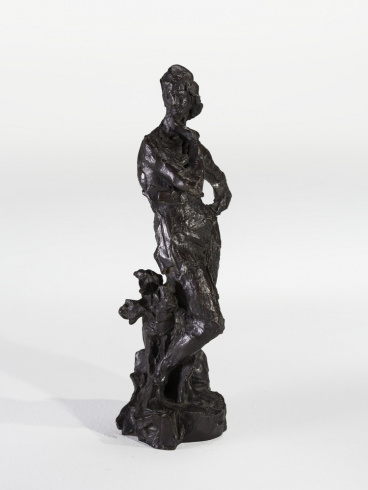
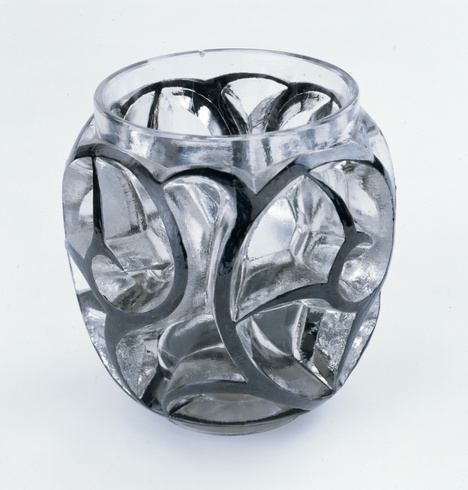
MUSEUM COLLECTION: DESIGN


15 SEPTEMBER 2012 - AUGUST 2013

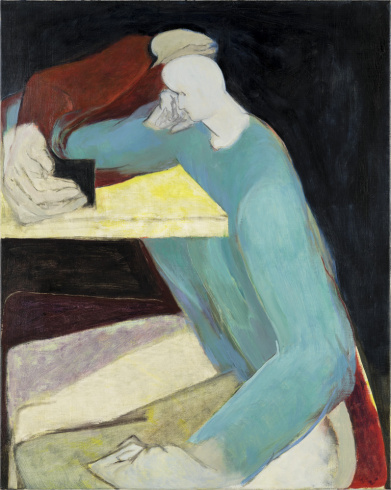
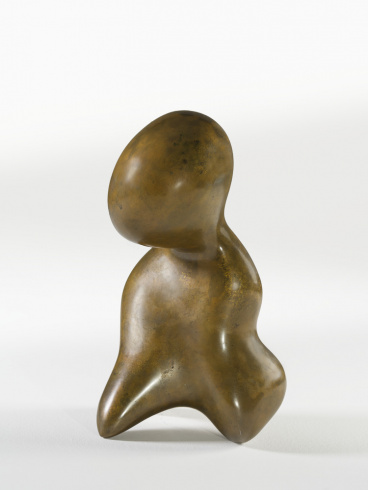
MUSEUM COLLECTION: LE CORTEGE DE L'ART 


COMING EXHIBITIONS

22 JUNY - SEPTEMBER 2013

MARKUS F.STRIEDER

SEPTEMBER 2013

TONY CRAGG
GUNTHER UECKER
ENRICO CASTELLANI
KIKI SMITH

Adresse postale : Musée d'Art Moderne - La Terrasse - CS 10241 - 42 006 Saint-Etienne cedex 1 - Adresse GPS : Rue Fernand Léger - 42270 Saint-Priest-en-Jarez